Stuffing Casserole
Classic stuffing casserole with seasoned bread cubes, celery, onion, and herbs baked until golden and crispy on top with a soft, savory center.
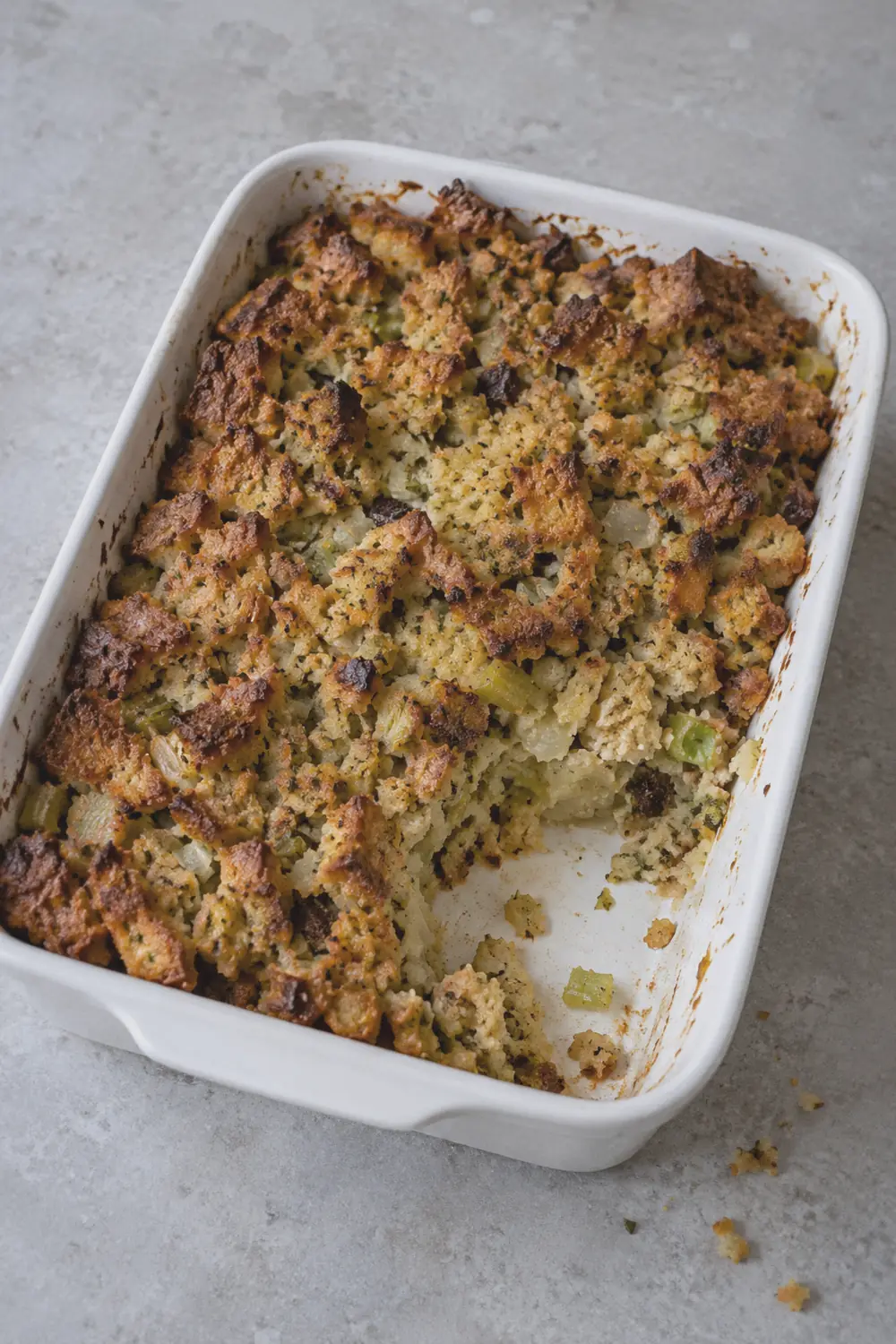
Stuffing casserole is the dish that turns a bag of bread cubes and a handful of vegetables into something worth fighting over at the table. Seasoned bread, celery, onion, and fresh herbs soaked in broth and baked until the top shatters and the center stays soft.
We make this version outside the bird so every inch of it can brown properly, and it works on any night you want a warm, herby side without standing at the stove.
Why This Recipe Works
Three choices separate this from soggy cafeteria stuffing.
- Dried bread cubes absorb without falling apart. Pre-dried cubes soak up broth evenly and hold their shape through baking, so you get distinct pieces with texture instead of a paste.
- Sauteed vegetables add a savory base. Cooking the onion and celery in butter before mixing draws out their moisture and concentrates their flavor, which means the stuffing tastes seasoned from the inside out.
- Two-stage baking locks in the layers. Covering first steams the interior until it sets, then uncovering lets the top crisp and brown without drying out the center.
Ingredient Notes
Simple ingredients, but a few choices matter more than you might expect.
- Bread cubes: Use the pre-dried seasoned stuffing cubes sold in bags. If you dry your own, cut day-old bread into 3/4-inch cubes and spread them on a sheet pan in a 250°F oven for 20 to 25 minutes. Fully dried cubes absorb broth evenly without turning to mush.
- Chicken broth: Low-sodium is non-negotiable. Regular broth plus the seasoning in the bread cubes can push the finished dish too salty. Warm the broth before adding so it absorbs faster and more evenly.
- Fresh herbs vs dried: Fresh sage and thyme give the cleanest flavor. If using dried, cut the amounts roughly in half. Dried herbs are more concentrated, so a little goes further.
- Eggs: Two eggs bind the casserole so it holds together when scooped. Skip them and the stuffing crumbles on the plate.
How to Make Stuffing Casserole
The short version. Full amounts and times are in the recipe card below.
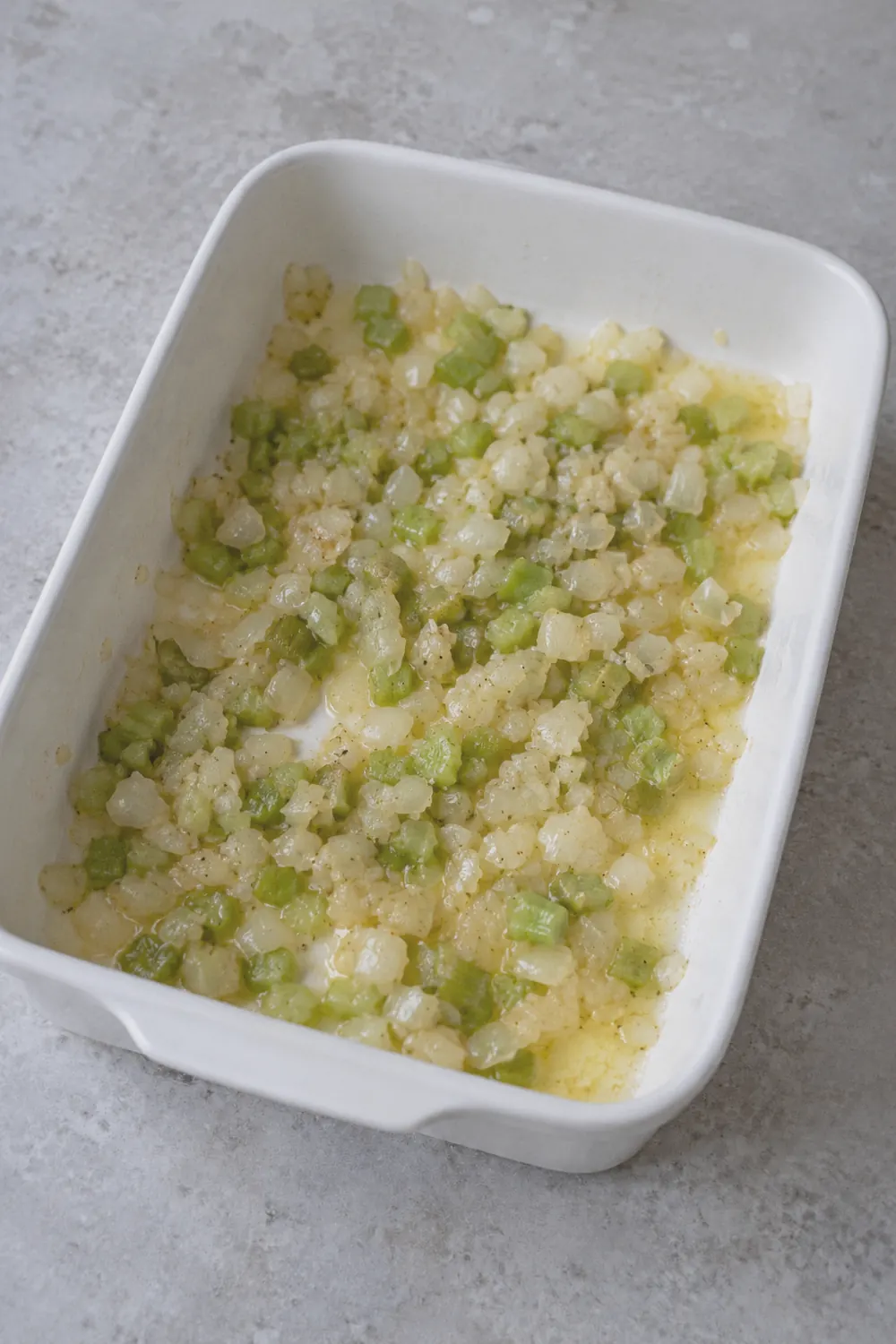
Step 1: Cook the vegetables. Melt butter in a large skillet and cook the onion and celery until soft and translucent, about 6 to 8 minutes. Add garlic for the last 30 seconds. Pour the vegetables and butter over the bread cubes in a large bowl.
Step 2: Add broth and toss. Whisk the warm broth with eggs and herbs, pour it over the bread, and fold gently until every cube is evenly moistened. The mixture should feel damp but not pooling liquid at the bottom.
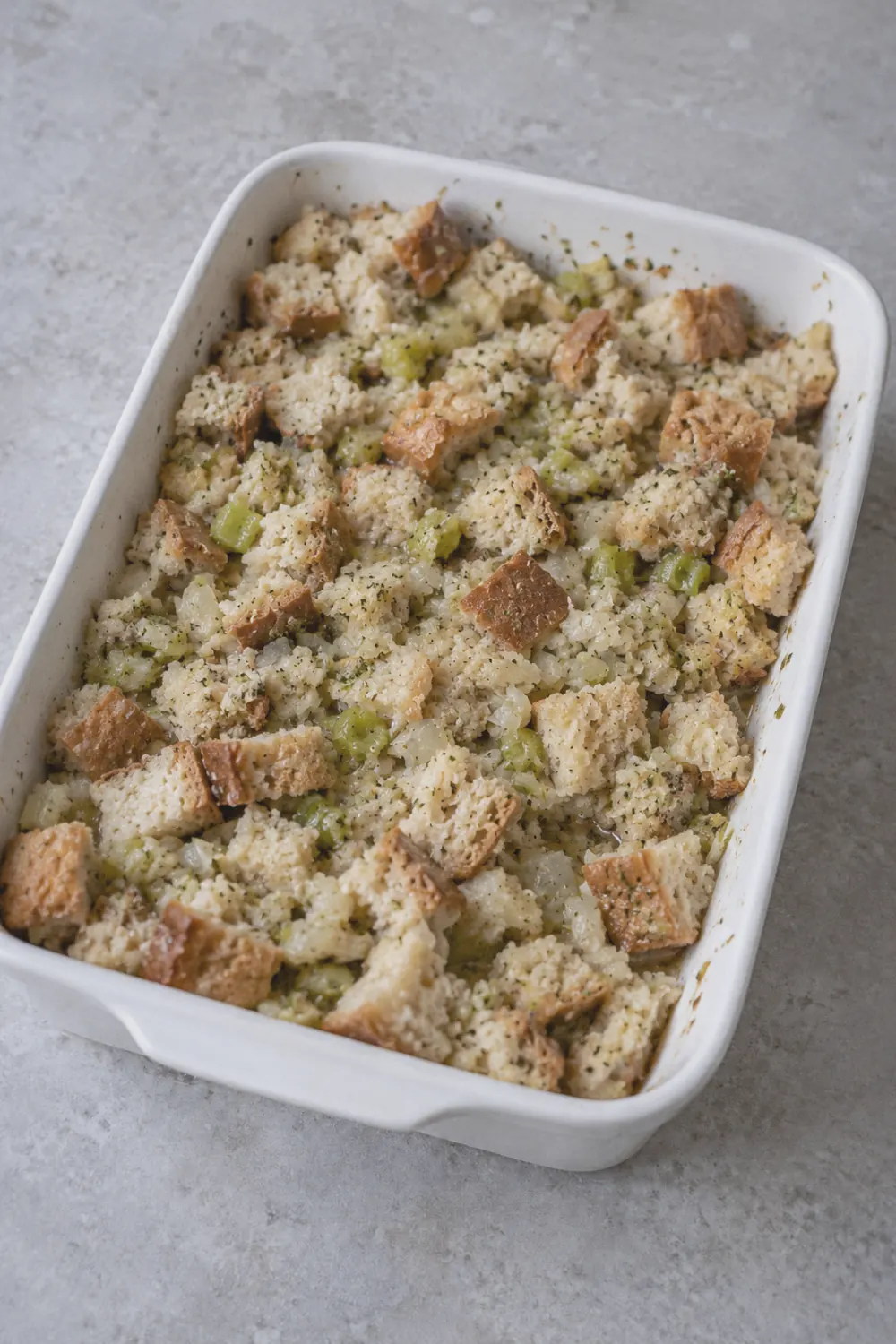
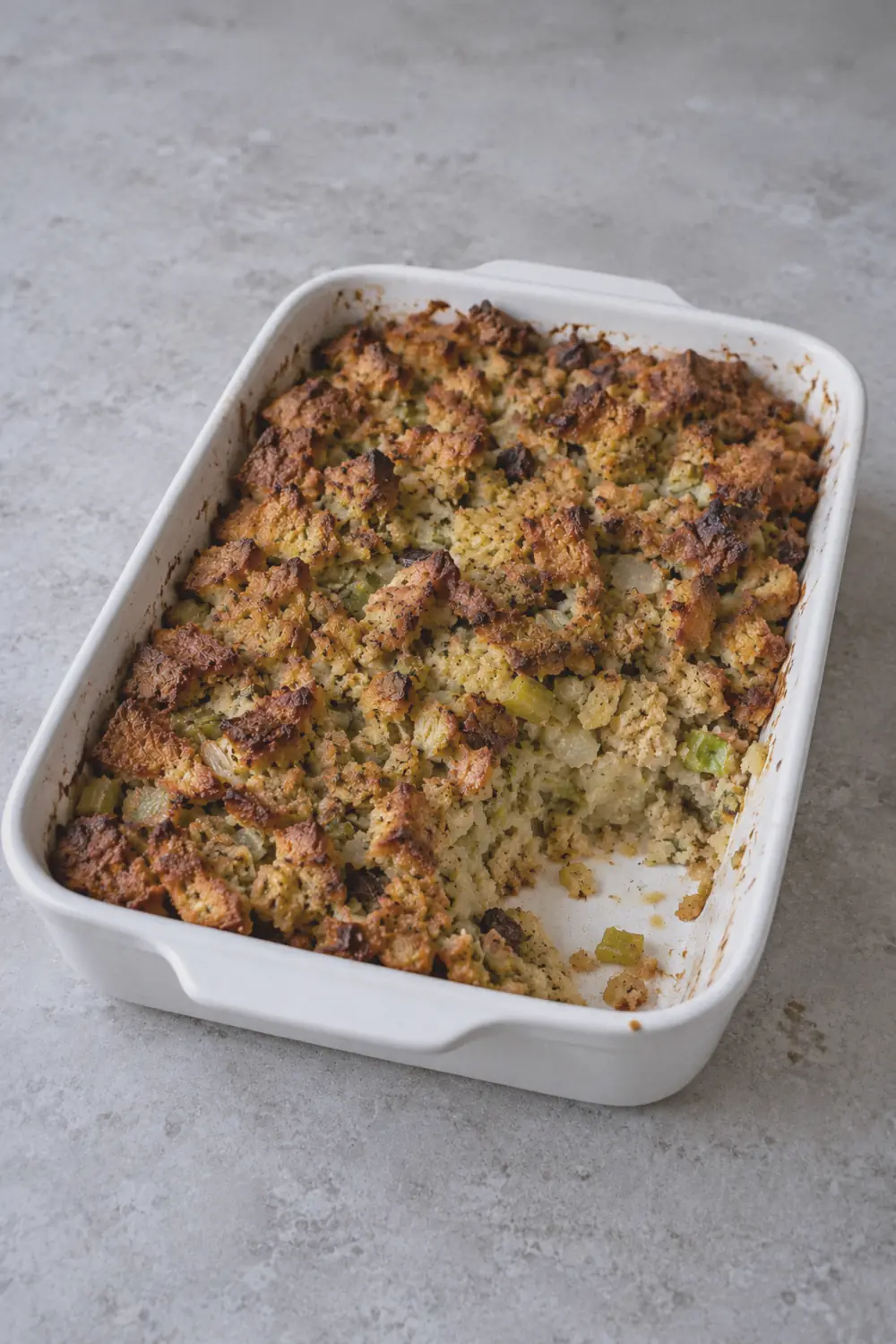
Step 3: Bake covered then uncovered. Spread the stuffing in a greased 9x13 dish, cover with foil, and bake 20 minutes. Remove the foil and bake another 15 to 20 minutes until the top is golden and crispy at the edges. Rest 5 to 10 minutes before serving.
Pro Tips
- Do not skip drying the bread. Soft fresh bread absorbs broth unevenly and collapses into a dense, gummy layer. Fully dried cubes give you the contrast between crispy top and tender center.
- Warm the broth before mixing. Cold broth sits on the surface of the bread instead of soaking in. Warm broth absorbs in seconds, which means more even seasoning and texture.
- Press gently into the dish. A light press with a spatula helps the cubes knit together so the casserole holds its shape when scooped. Do not pack it down hard or the center will be too dense.
- Check at 35 minutes total. Ovens vary, and the exposed top can go from golden to too dark quickly once the foil comes off. If the edges are browning too fast, rotate the dish.
- Make it ahead. Assemble the casserole, cover, and refrigerate up to 24 hours. Bake from cold, adding 5 to 10 extra minutes. The top still crisps perfectly.
Variations
The base recipe takes additions without losing its structure. These are the ones we come back to.
- Sausage stuffing: Brown 8 oz of crumbled breakfast sausage, drain, and fold it into the bread mixture before baking. It adds richness and protein.
- Apple and cranberry: Toss in 1 cup of diced peeled apple and 1/2 cup of dried cranberries with the bread cubes. The sweetness balances the savory herbs.
- Mushroom and leek: Saute 8 oz of sliced cremini mushrooms and 1 sliced leek with the onion and celery. Adds an earthy layer.
- Cornbread stuffing: Replace half the bread cubes with crumbled dried cornbread for a Southern take with a slightly sweeter, crumblier texture.
Storage & Reheating
Cool leftovers to room temperature, then cover tightly and refrigerate within 2 hours. Stuffing casserole keeps in the fridge for 3 to 4 days.
Reheat individual portions in the microwave for 60 to 90 seconds. For larger amounts, cover with foil and warm in a 325°F oven for 15 to 20 minutes until heated through. The casserole freezes well for up to 2 months. Wrap portions tightly in foil and a layer of plastic wrap, then thaw overnight in the fridge before reheating.
FAQ
Can I use fresh bread instead of dried bread cubes?
You can, but you need to dry it first. Cut the bread into 3/4-inch cubes and spread them in a single layer on a sheet pan. Bake at 250°F for 20 to 25 minutes until they feel dry and light. Fresh bread absorbs broth unevenly and turns the casserole gummy.
How do I know when the casserole is done?
The top should be deep golden brown and crispy, and the edges should be pulling away from the sides of the dish slightly. If you press the center gently, it should feel firm and spring back, not wet or squishy.
Can I make stuffing casserole without eggs?
Yes, but the casserole will be looser and harder to scoop in clean portions. The eggs bind the bread cubes together once baked. Without them, you get a more rustic, crumbly version that still tastes good but does not hold its shape as well.
Is stuffing casserole the same as dressing?
In many parts of the United States, stuffing baked outside the bird is called dressing. This recipe works either way. We bake it in a dish because it browns more evenly and eliminates food safety concerns about cooking inside poultry.
What to Serve With Stuffing Casserole
Stuffing casserole pairs naturally with roasted poultry and gravy. Try it alongside sweet potato casserole for a holiday spread, or serve it with green bean casserole and a simple roast chicken for a weeknight version of a full holiday plate.
Stuffing Casserole
Classic stuffing casserole with seasoned bread cubes, celery, onion, and herbs baked until golden and crispy on top with a soft, savory center.
- Prep
- 15 min
- Cook
- 40 min
- Total
- 55 min
- Servings
- 10
- Calories
- 290
Ingredients
Instructions
- Heat the oven to 350 F (177 C). Grease a 9x13-inch baking dish with butter or cooking spray.
- Melt the butter in a large skillet over medium heat. Add the diced onion and celery and cook, stirring occasionally, until softened and translucent, about 6 to 8 minutes. Add the garlic and cook 30 seconds more until fragrant. Remove from the heat.
- Place the dried bread cubes in a large mixing bowl. Pour the cooked vegetables and melted butter over the bread and toss to coat evenly.
- In a small bowl, whisk together the warm chicken broth, beaten eggs, sage, thyme, salt, pepper, and celery seed. Pour the broth mixture over the bread cubes and fold gently until the liquid is absorbed and the bread is evenly moistened. The mixture should be damp throughout but not soupy.
- Transfer the stuffing mixture into the prepared baking dish and spread it in an even layer. Press it down lightly with a spatula to compact slightly.
- Cover the dish tightly with aluminum foil and bake for 20 minutes. Remove the foil and bake for another 15 to 20 minutes, until the top is golden brown and crispy at the edges.
- Let the casserole rest for 5 to 10 minutes before serving so it sets and scoops cleanly.
Filed under: bread · american
Crisp & Simmer
Easy weeknight recipes, organized by method. Every recipe is built on tested methods and safe-temperature standards — and corrected fast when readers tell us something's off.