Salmon Rice Bowl
A simple salmon rice bowl with soy-glazed pan-seared salmon, seasoned sushi rice, cucumber, avocado, and spicy mayo. A weeknight dinner that feels like takeout in 25 minutes.
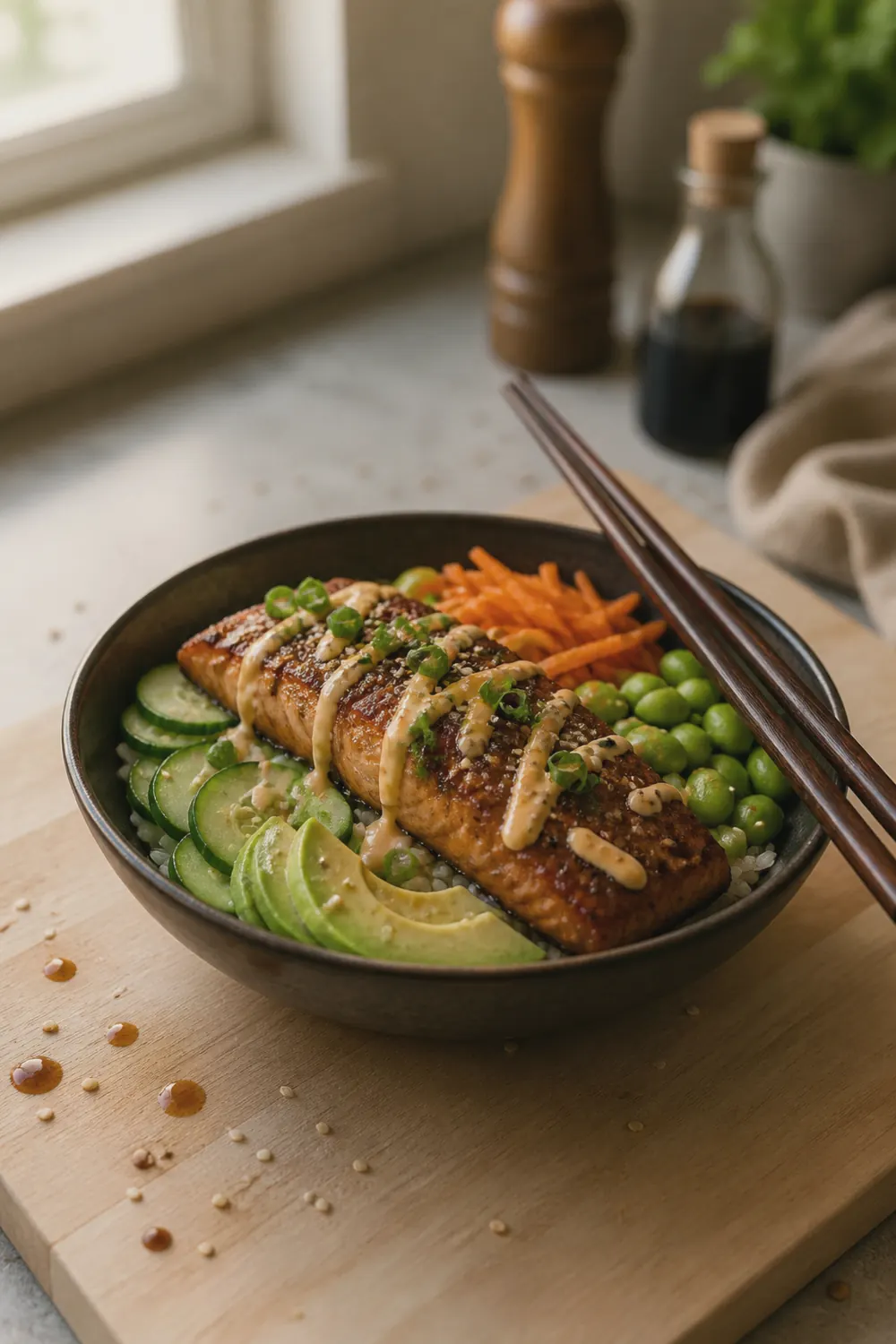
This salmon rice bowl puts a crispy, soy-glazed fillet on seasoned sushi rice with cool cucumber, creamy avocado, and a drizzle of spicy mayo. It tastes like the poke bowl counter down the street, except you made it in your own kitchen in 25 minutes.
Why This Works
- A quick soy-honey glaze does the heavy lifting. Five minutes of marinating gives the salmon enough surface flavor to caramelize into a golden crust without needing a complicated sauce. The honey helps with browning while the soy and rice vinegar add a salty tang that carries through every bite.
- Seasoned rice is the foundation, not an afterthought. Folding rice vinegar and a pinch of sugar into warm short-grain rice is the same technique used for sushi rice. It makes plain rice taste intentional and slightly sticky so toppings stay in place on the fork.
- Temperature contrast keeps every bite interesting. Warm salmon and rice against cold cucumber, cool avocado, and chilled edamame create the same hot-cold play that makes restaurant bowls feel layered. Without it, the whole bowl flattens into one warm pile.
Ingredient Notes
Salmon fillets should be about 1 inch thick at the center for even cooking. Both skin-on and skinless work here. Skin-on fillets give you the option of crispy skin on the bottom, but skinless fillets are easier to flip and eat in a bowl. Either way, pat them completely dry before they hit the pan. Moisture on the surface steams instead of searing, and you lose that golden crust.
For the rice, short-grain sushi rice or Calrose rice gives you the slightly sticky texture that holds toppings in place. Long-grain rice works but the grains separate more and slide around in the bowl. Cook the rice just before you start prepping so it is still warm when you season it. Cold rice does not absorb the vinegar dressing evenly. If you already have leftover instant pot rice, warm it in the microwave with a damp paper towel before seasoning.
Edamame adds a pop of green and plant protein. Thaw frozen shelled edamame under warm running water for 30 seconds. No cooking needed.
How to Make It
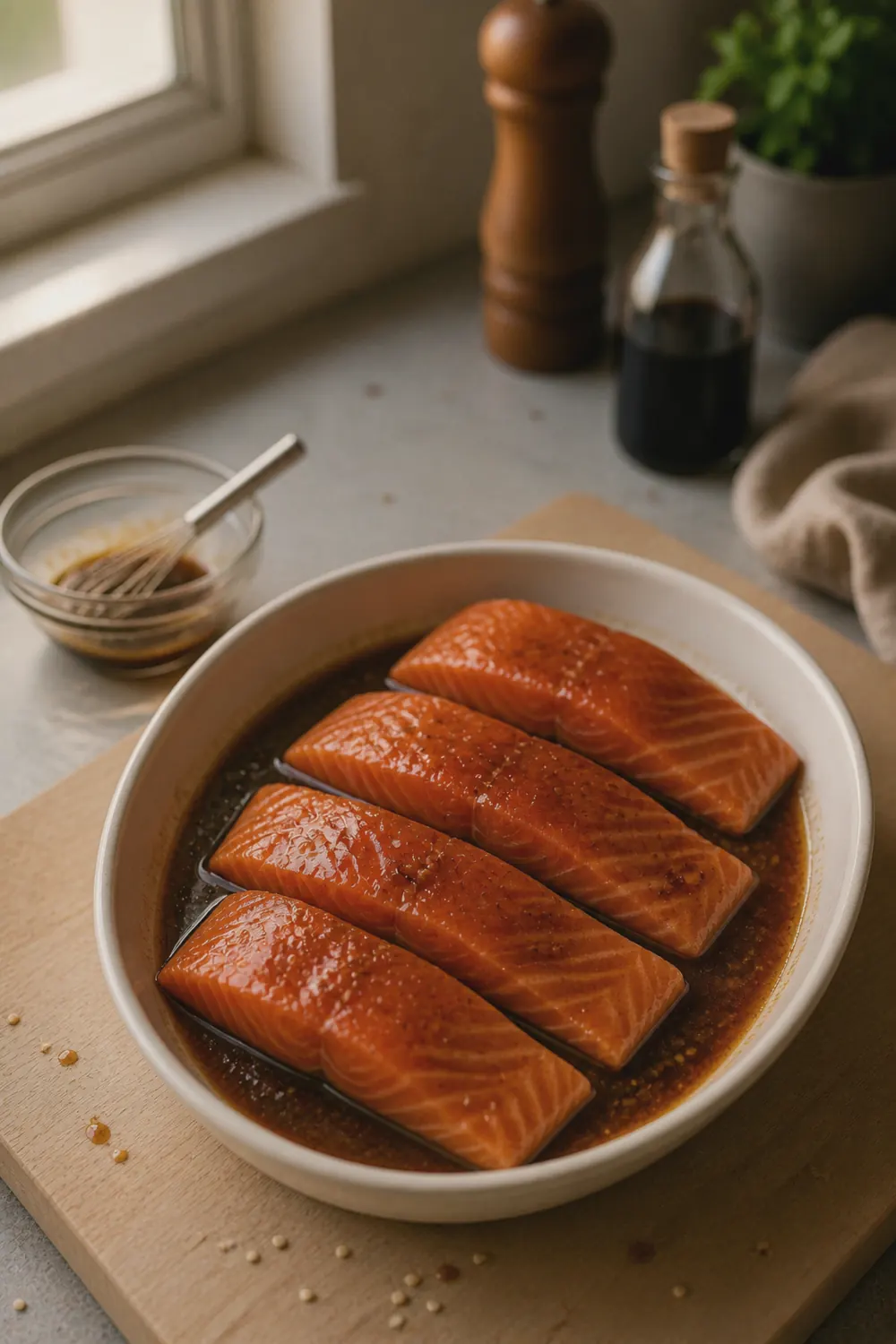
1. Marinate the salmon. Pat the fillets dry and whisk together soy sauce, rice vinegar, honey, and sesame oil. Pour it over the salmon and let it sit for 5 to 10 minutes while you prep. This is not a long marinade. The soy and acid work fast on the surface, and more than 15 minutes starts to change the texture of the fish.
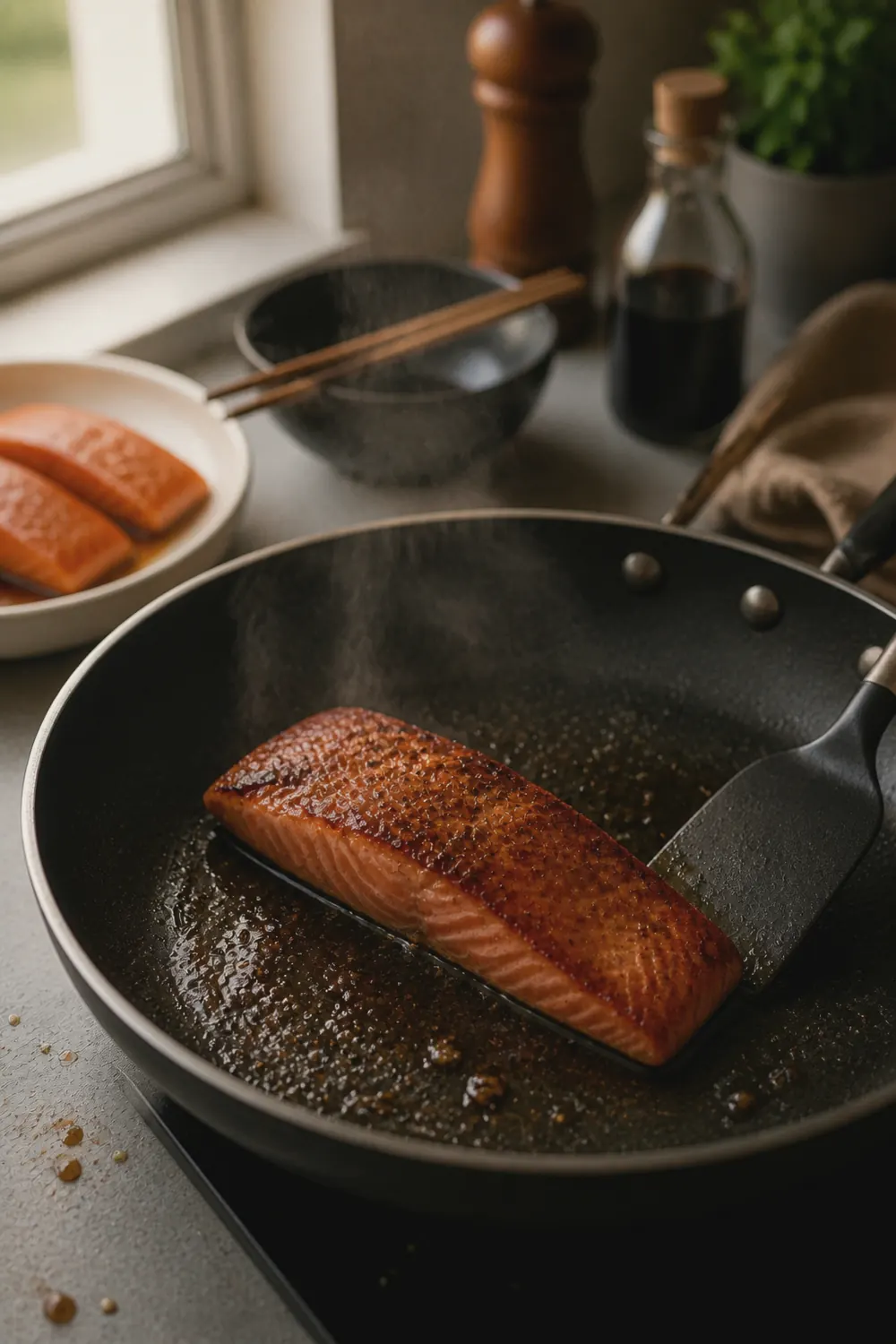
2. Sear the salmon. Heat neutral oil in a nonstick skillet over medium-high heat until the oil shimmers. Place the salmon presentation side down and do not move it for 3 to 4 minutes. That uninterrupted contact with the hot pan is what builds the crust. Flip once and cook another 3 to 4 minutes until the center reaches 145°F (63°C), which is the USDA minimum for fish. Let the fillets rest on a plate for 2 minutes. The temperature will climb a few degrees and the juices redistribute.
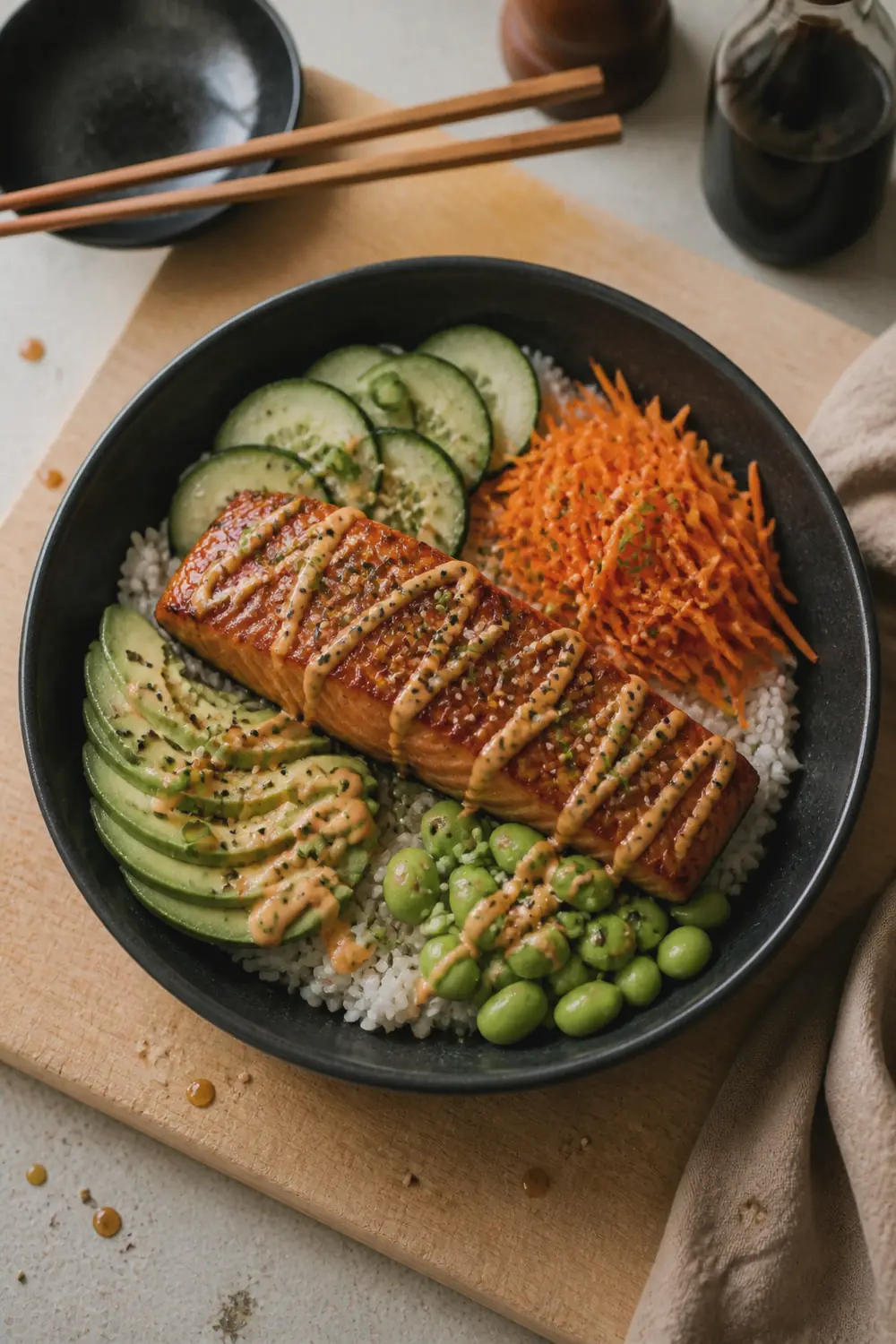
3. Assemble the bowls. Divide seasoned rice among four bowls. Set a salmon fillet on each, breaking it into large flakes if you like. Arrange cucumber, avocado, carrots, and edamame in sections around the salmon. Drizzle spicy mayo in a zigzag, scatter sesame seeds and green onions on top, and put soy sauce on the side.
Pro Tips
- Dry the salmon twice. Pat it dry before marinating and blot the surface again right before it hits the pan. That second pat removes the liquid from the marinade sitting on the surface, which prevents steaming and gives you a better sear.
- Do not crowd the skillet. If your pan cannot fit all four fillets with space between them, cook in two batches. Crowding drops the pan temperature and the salmon stews instead of searing.
- Check temperature, not color. Salmon can look done on the outside while the center is still raw. An instant-read thermometer at the thickest point is the only reliable test. Pull at 145°F (63°C) and rest for 2 minutes.
- Cut the avocado last. Avocado browns quickly once sliced. Keep it whole until everything else is plated and the bowls are ready to serve.
- Season the rice while warm. The vinegar dressing absorbs into warm grains and distributes evenly. Tossing it into cold rice leaves pockets of plain and pockets of sour.
Variations
- Teriyaki salmon bowl. Replace the soy-honey glaze with store-bought or homemade teriyaki sauce. Brush it on during the last minute of cooking for a sticky, caramelized finish. Our teriyaki chicken bowl uses a similar approach if you want to compare the two proteins.
- Spicy tuna rice bowl. Swap the salmon for sushi-grade ahi tuna. Sear it for 1 to 2 minutes per side so the center stays rare. Dice it into cubes and toss with sriracha mayo before placing on the rice.
- Salmon poke-style bowl. Use raw sushi-grade salmon cut into cubes instead of cooking it. Toss the cubes in the soy-honey mixture and serve immediately over the seasoned rice. Only use fish labeled sushi-grade or previously frozen to -4°F (-20°C) for at least 7 days.
- Mediterranean salmon bowl. Skip the soy glaze and season the salmon with lemon, olive oil, oregano, and garlic. Swap the toppings for cherry tomatoes, Kalamata olives, red onion, and a drizzle of tzatziki.
Storage & Reheating
Store leftover salmon and rice in separate airtight containers in the refrigerator for up to 3 days. Keep the fresh toppings (cucumber, avocado) separate and add them cold after reheating.
Reheat the salmon in a skillet over medium-low heat for 2 to 3 minutes per side. Covering the pan with a lid helps warm the center without overcooking the outside. Microwave the rice with a splash of water and a damp paper towel at 50% power for 90 seconds. Do not microwave the salmon if you can avoid it. Microwaved salmon dries out and develops a stronger fishy smell.
Cooked salmon does not freeze as well as raw salmon. If you want to meal prep, freeze the raw marinated fillets in zip-top bags for up to 2 months. Thaw overnight in the refrigerator and cook fresh.
FAQ
Can I use frozen salmon?
Frozen salmon works well here. Thaw it overnight in the refrigerator on a plate lined with paper towels. Pat it thoroughly dry before marinating. Do not thaw salmon at room temperature or under warm water, as uneven thawing creates food safety risks. Once thawed, treat it the same as fresh.
What if I do not have sushi rice?
Any short-grain white rice is a close substitute. Calrose rice, which is widely available in most grocery stores, gives a similar sticky texture. Long-grain rice like jasmine or basmati will work but the bowl will feel looser because those grains do not cling together the same way. Season whatever rice you use with the vinegar mixture while warm.
How do I know when the salmon is done?
An instant-read thermometer at the thickest part of the fillet should read 145°F (63°C), which is the USDA recommended minimum for fish. Visually, the flesh should flake easily when pressed with a fork and look opaque throughout. Medium-rare salmon (120°F / 49°C) is popular at restaurants but does not meet USDA guidelines for home cooking.
What to Serve With
A bowl of chicken soup makes a light starter if you are turning this into a fuller meal. For another bowl-style dinner that goes from counter to table in under 30 minutes, our buffalo chicken bowl hits the same weeknight sweet spot with a completely different flavor profile.
Salmon Rice Bowl
A simple salmon rice bowl with soy-glazed pan-seared salmon, seasoned sushi rice, cucumber, avocado, and spicy mayo. A weeknight dinner that feels like takeout in 25 minutes.
- Prep
- 10 min
- Cook
- 15 min
- Total
- 25 min
- Servings
- 4
- Calories
- 520
Ingredients
Instructions
- Pat salmon fillets dry with paper towels. Whisk together soy sauce, rice vinegar, honey, and sesame oil in a small bowl. Pour the mixture over the salmon and let it sit for 5 to 10 minutes at room temperature while you prepare the rice and toppings.
- Season the cooked rice by folding in the seasoned rice vinegar, sugar, and salt while the rice is still warm. Use a cutting motion with a rice paddle or spatula to avoid smashing the grains. Cover and set aside.
- Heat neutral oil in a large nonstick skillet over medium-high heat until the oil shimmers. Place the salmon fillets presentation side down (skin side up if skin-on). Cook without moving for 3 to 4 minutes until a golden crust forms. Flip carefully and cook for another 3 to 4 minutes until the thickest part reaches 145°F (63°C) per USDA guidelines. Remove to a plate and let rest for 2 minutes.
- While the salmon rests, stir together the mayonnaise and sriracha in a small bowl to make the spicy mayo.
- Divide the seasoned rice among four bowls. Place one salmon fillet on each bowl, breaking it into large flakes if preferred. Arrange cucumber slices, avocado, shredded carrots, and edamame around the salmon. Drizzle with spicy mayo, sprinkle with sesame seeds and sliced green onions, and serve with extra soy sauce on the side.
Filed under: salmon · rice · asian
Crisp & Simmer
Easy weeknight recipes, organized by method. Every recipe is built on tested methods and safe-temperature standards — and corrected fast when readers tell us something's off.