Chicken Pot Pie Soup
A creamy, hearty chicken pot pie soup loaded with tender chicken, vegetables, and a rich broth. All the comfort of chicken pot pie without the fuss of making a crust.
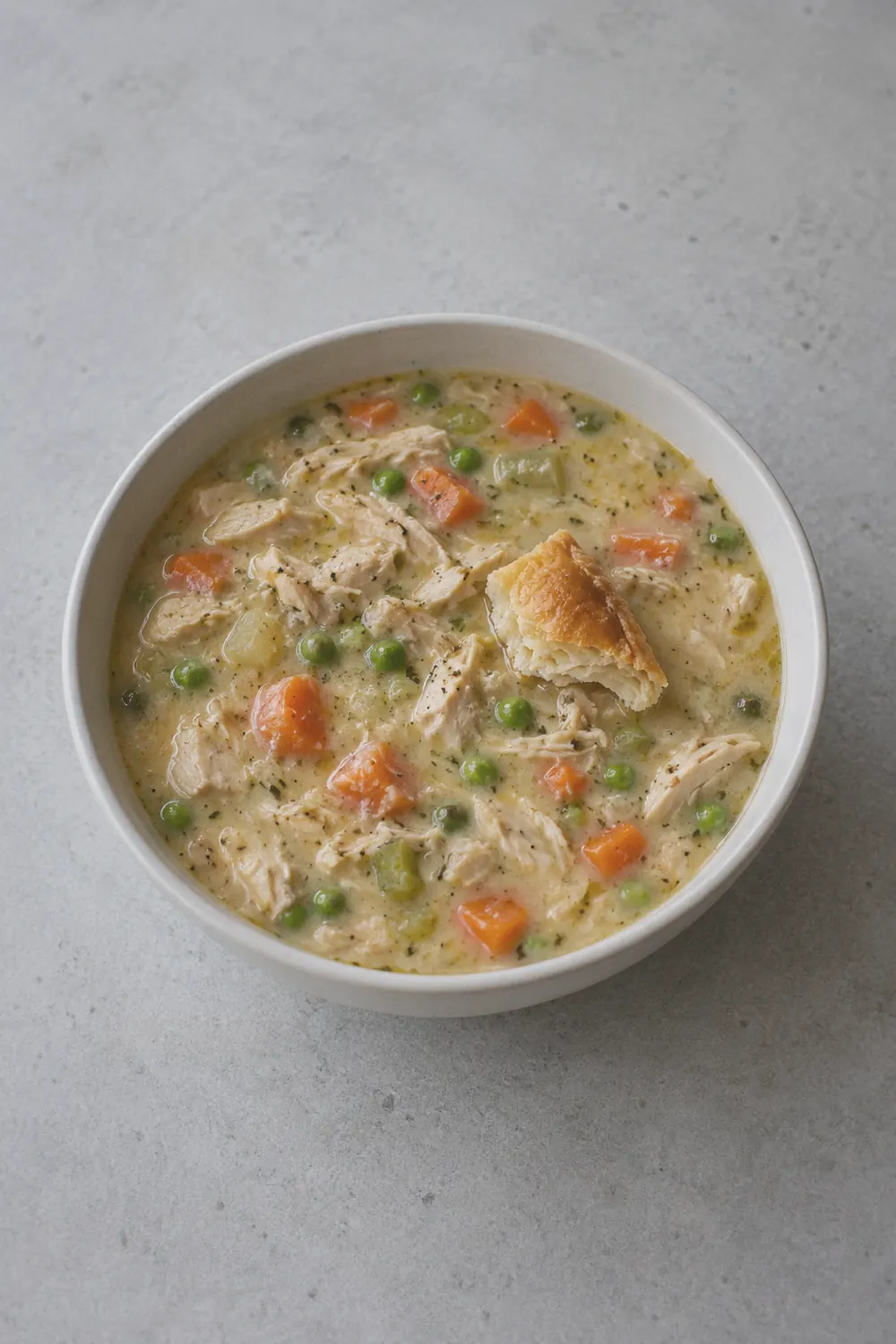
This chicken pot pie soup captures everything you love about a classic pot pie — the creamy filling, the tender chicken, the soft vegetables — and puts it in a bowl you can make in under an hour. No rolling dough, no blind baking, no waiting around for a crust to brown.
Why This Works
- A roux-thickened base gives the soup that signature pot pie richness without any cornstarch sliminess. Flour toasted in butter builds body and flavor at the same time.
- Searing the chicken first creates fond on the bottom of the pot that dissolves into the broth. That browned flavor is what separates a good pot pie soup from one that tastes like cream of chicken from a can.
- Frozen peas go in at the end so they keep their color and a slight bite instead of turning army green and mushy.
Ingredient Notes
Chicken: Boneless, skinless breasts are traditional here. Thighs work too and stay more tender if you happen to overcook slightly — use the same weight and cook to 165°F (74°C) either way.
Flour: All-purpose flour makes the roux that thickens this soup. For a gluten-free version, substitute with a 1:1 gluten-free flour blend, though the texture will be slightly thinner.
Broth: Low-sodium chicken broth lets you control the salt. The roux, cream, and reduction all concentrate saltiness, so starting low keeps the finished soup from tipping over.
Heavy cream and milk: The combination keeps the soup rich without being as heavy as an all-cream base. Whole milk is ideal — skim or low-fat will make the soup thinner and less velvety.
How to Make It
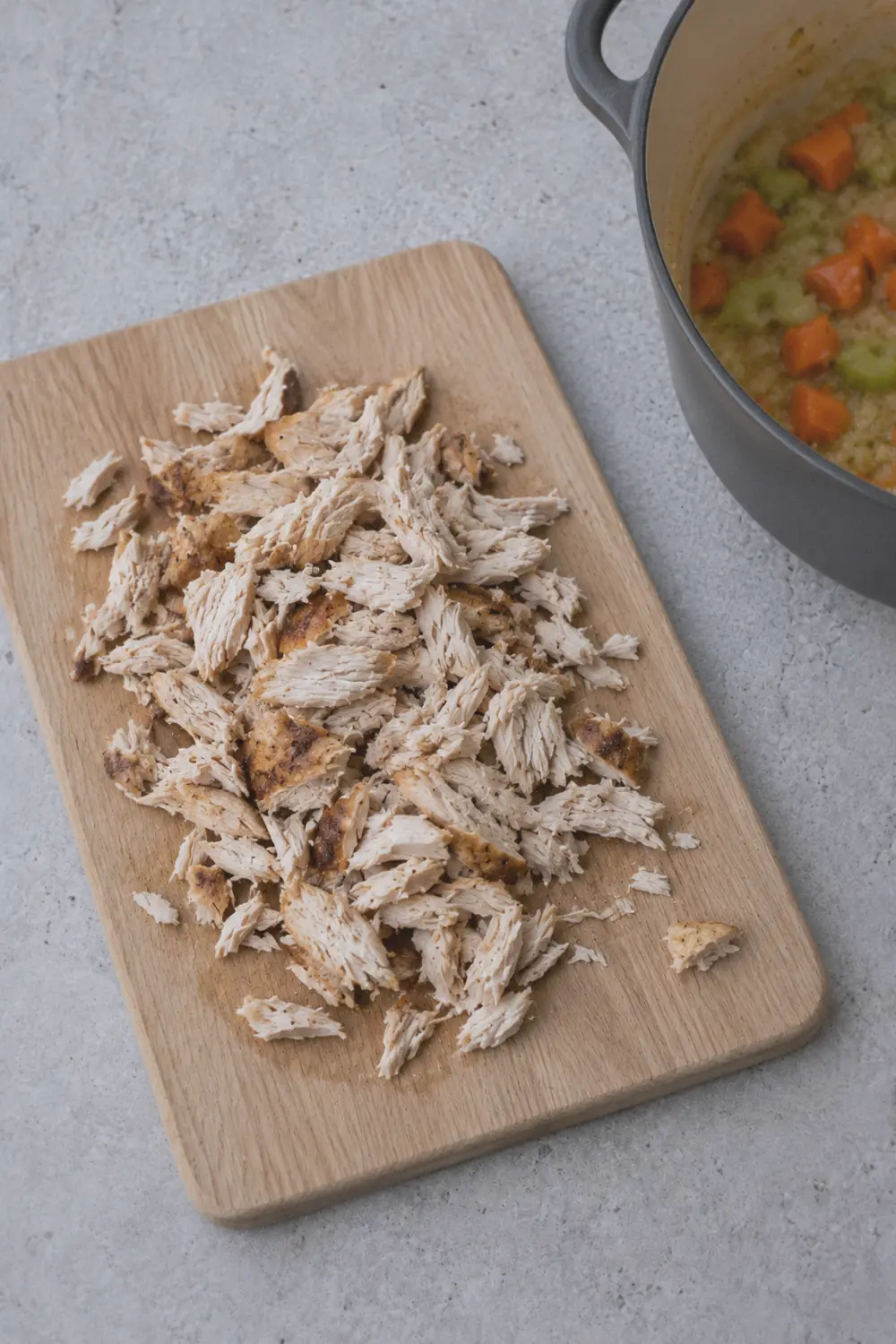
1. Sear the chicken. Season with salt and pepper, then cook in butter over medium-high heat for 4 to 5 minutes per side until golden and the internal temperature reads 165°F (74°C). Rest for 5 minutes, then shred into bite-sized pieces with two forks.
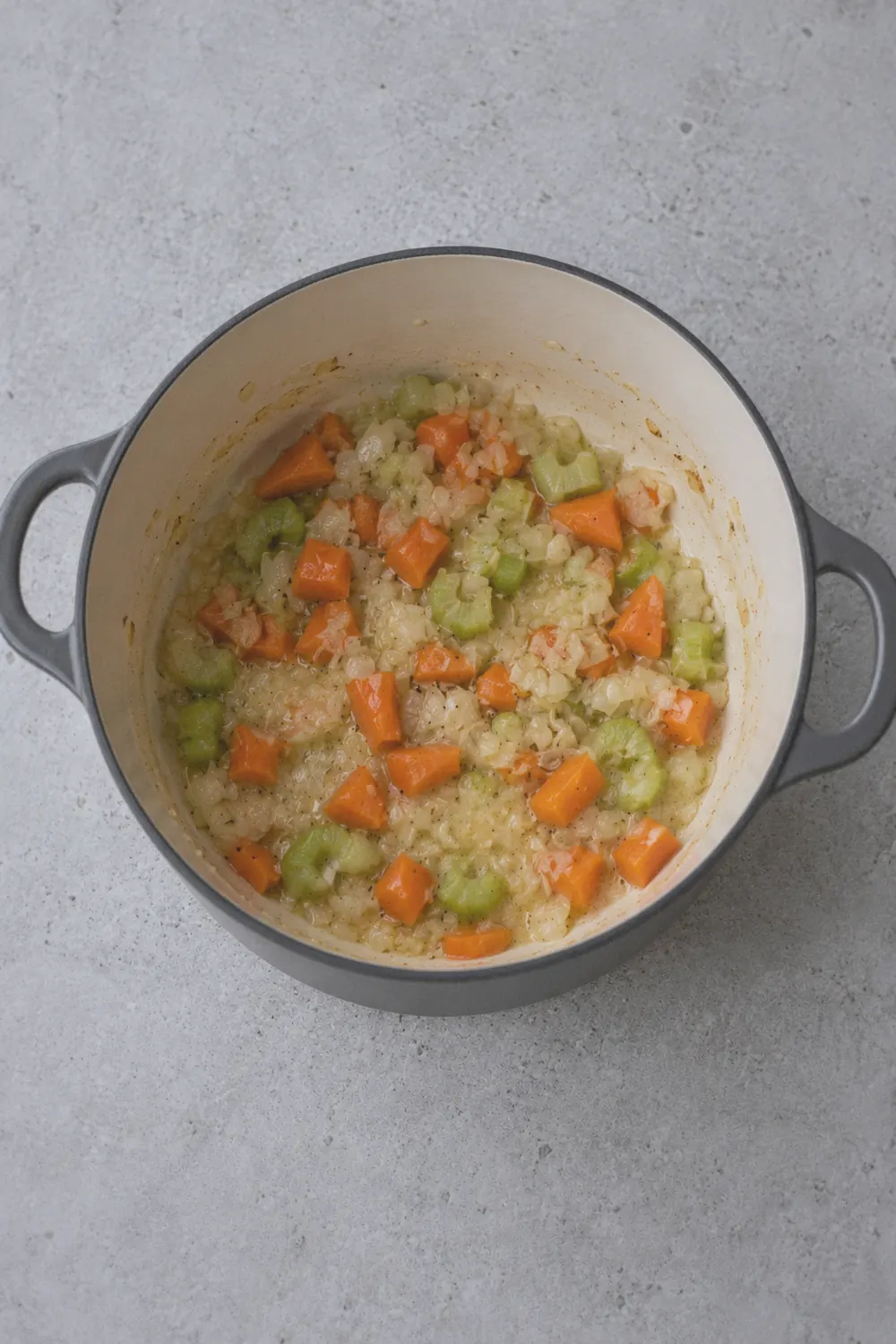
2. Cook the vegetables. In the same pot, melt the remaining butter over medium heat. Add the onion, celery, and carrots and cook for 5 to 6 minutes until the onion is soft. The fond from the chicken will start lifting off the bottom — that is flavor going into your soup.
3. Build the roux. Add garlic and cook 30 seconds. Sprinkle flour over the vegetables and stir constantly for 1 to 2 minutes. Every vegetable piece should be coated and the raw flour smell should be gone.
4. Add liquids and simmer. Pour in the broth slowly while stirring to keep lumps from forming. Add milk, thyme, and onion powder. Bring to a simmer and cook for 10 to 12 minutes, stirring now and then, until the soup thickens enough to coat the back of a spoon.
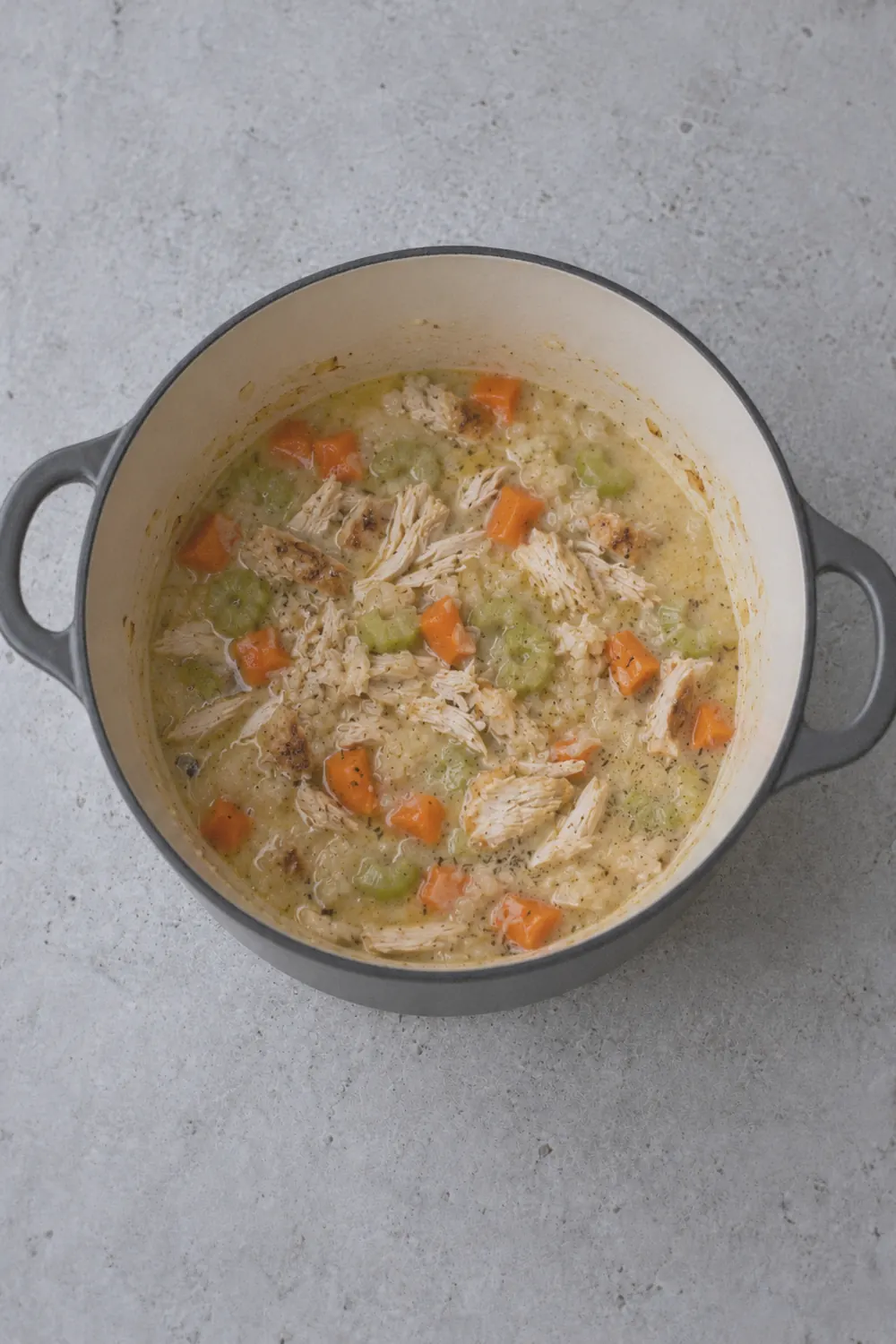
5. Finish and serve. Stir in cream, frozen peas, and shredded chicken. Cook 2 to 3 minutes until the peas are warmed through. Ladle into bowls and top with a baked puff pastry round or a square of pie crust if you want that pot pie crunch on top.
Pro Tips
- Do not rush the roux. Cooking the flour for a full 1 to 2 minutes removes the raw, pasty taste. If it smells like wet flour, it needs more time.
- Add the broth slowly while whisking or stirring constantly. Dumping it all in at once almost guarantees lumps in your soup.
- Shred the chicken while it is still warm — it pulls apart much more easily than cold chicken. A mix of strands, flakes, and chunks gives the best texture.
- Bake puff pastry rounds separately on a sheet pan at 400°F (200°C) for 12 to 15 minutes until puffed and golden, then float one on each bowl right before serving. Dropping raw pastry into hot soup makes it soggy.
Variations
- Biscuit-topped: Drop canned biscuit dough rounds on top of the simmering soup, cover, and cook for 15 minutes until the biscuits are cooked through. A heartier, more rustic approach.
- Lighter version: Skip the cream entirely and use 2% milk for both the milk and cream portions. The soup will be thinner but still flavorful — increase the flour to a scant half cup to compensate.
- With bacon: Cook 4 slices of chopped bacon in the pot first, remove, and use the rendered fat in place of some of the butter. Crumble the bacon on top when serving.
- Turkey pot pie soup: Substitute leftover roasted or rotisserie turkey for the chicken. Skip the searing step — just dice and stir it in with the peas at the end.
Storage and Reheating
Fridge: Store in an airtight container for up to 3 days. The soup thickens considerably as it cools — thin it with a splash of broth or milk when reheating.
Freezer: Freeze without the puff pastry topping for up to 3 months. Thaw overnight in the fridge and reheat on the stovetop over medium-low heat, stirring often. The cream may separate slightly — a good stir brings it back together.
Reheat gently on the stovetop over medium-low heat. Stir frequently to prevent the bottom from scorching. Add broth as needed to restore the original consistency.
FAQ
Can I use rotisserie chicken?
Absolutely. Skip the searing step and shred about 3 cups of meat from a store-bought rotisserie chicken. Stir it in with the peas and cream at the end. You lose the fond from searing, but the rotisserie flavor more than makes up for it.
How do I keep the soup from getting too thick?
The roux and simmering will thicken it steadily. If it passes your preferred consistency, stir in broth a quarter cup at a time. It also thickens as it sits, so aim slightly thinner than you want if you are not serving immediately.
Can I make this in a slow cooker?
You can, but sear the chicken and build the roux on the stovetop first — a slow cooker cannot do either well. Transfer everything to the slow cooker, add broth and milk, and cook on low for 4 to 6 hours. Stir in cream and peas during the last 15 minutes.
What to Serve With
This soup is a full meal on its own, but a side of crusty bread or buttermilk biscuits makes it even better. For a lighter pairing, try it with a simple green salad. If you are feeding a crowd, set it alongside our chicken noodle soup and marry me chicken soup for a soup bar spread.
Chicken Pot Pie Soup
A creamy, hearty chicken pot pie soup loaded with tender chicken, vegetables, and a rich broth. All the comfort of chicken pot pie without the fuss of making a crust.
- Prep
- 15 min
- Cook
- 30 min
- Total
- 45 min
- Servings
- 6
- Calories
- 380
Ingredients
Instructions
- Season the chicken breasts with salt and pepper. In a large Dutch oven or heavy pot, melt 1 tablespoon of butter over medium-high heat. Sear the chicken for 4 to 5 minutes per side until golden brown and cooked through to an internal temperature of 165°F (74°C). Transfer to a cutting board, let rest 5 minutes, then shred or dice into bite-sized pieces.
- In the same pot, melt the remaining 2 tablespoons of butter over medium heat. Add the onion, celery, and carrots. Cook for 5 to 6 minutes, stirring occasionally, until the onion is soft and translucent.
- Add the garlic and cook for 30 seconds until fragrant. Sprinkle the flour over the vegetables and stir constantly for 1 to 2 minutes to cook off the raw flour taste and coat the vegetables evenly.
- Slowly pour in the chicken broth while stirring to prevent lumps. Add the milk, thyme, and onion powder. Bring to a simmer and cook for 10 to 12 minutes, stirring occasionally, until the soup has thickened enough to coat the back of a spoon.
- Stir in the heavy cream, frozen peas, and the shredded chicken. Cook for 2 to 3 minutes until the peas are heated through. Taste and adjust salt and pepper. Ladle into bowls and top with a baked puff pastry round if desired.
Filed under: chicken · american
Crisp & Simmer
Easy weeknight recipes, organized by method. Every recipe is built on tested methods and safe-temperature standards — and corrected fast when readers tell us something's off.